
What Is the Pelvic Floor? A Beginner’s Guide
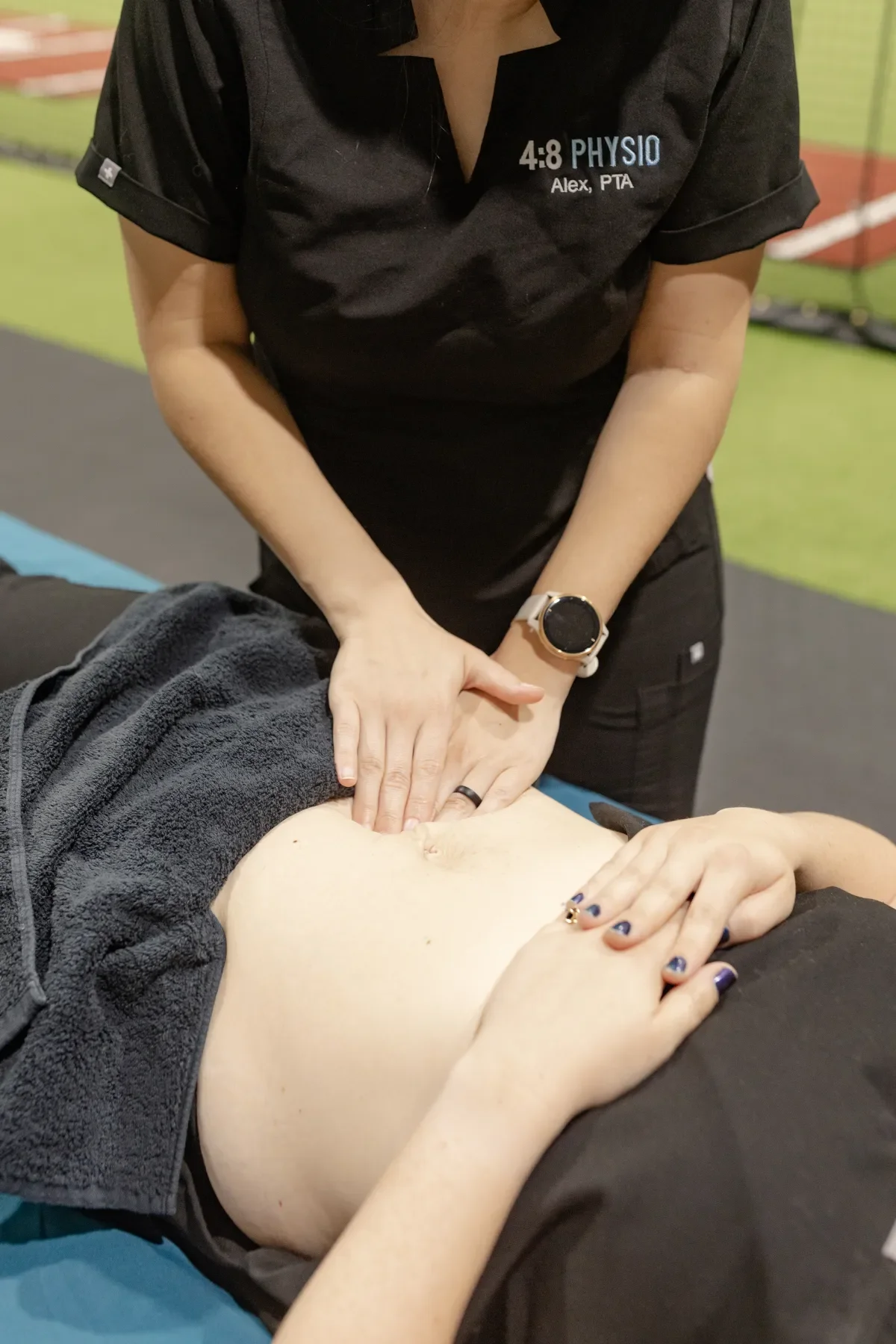
The pelvic floor is one of the most important — and most misunderstood — regions of the human body. At 4:8 Physio, we meet clients from Crestview, Baker, Niceville, Destin, and the greater Emerald Coast who have never been taught what their pelvic floor actually is, despite dealing with symptoms ranging from urinary leaking to hip, low back, or pelvic pain.
This guide explains the pelvic floor in both medical terminology and simple, everyday language so you can understand your body and make informed decisions about pelvic floor PT, postpartum recovery, or general fitness.
⸻
What Exactly Is your Pelvic Floor?
Medical definition:
The pelvic floor is a group of muscles, ligaments, fascia, and connective tissues that span the bottom of the pelvis like a hammock. These structures support the pelvic organs — bladder, uterus/prostate, and rectum — and help regulate continence, sexual function, and intra-abdominal pressure.
Layman’s explanation:
Think of the pelvic floor like the foundation of your core. It holds things up, keeps things in, helps you go to the bathroom when you want to, and stabilizes your entire trunk.
⸻
Functions of the Pelvic Floor
1. Support
Holds up the bladder, rectum, and reproductive organs like a muscular sling.
2. Sphincter Control
Provides voluntary control over urination and bowel movements.
3. Sexual Function
Plays a major role in sexual arousal, lubrication, erection, and orgasm.
4. Stability
Works together with the diaphragm, deep abdominals, and spinal muscles to stabilize the spine and hips.
This is why pelvic floor dysfunction can contribute to low back pain, hip pain, SI joint pain, and even knee/ankle symptoms — keywords intentionally included.
5. Pressure Management
Coordinates with breathing to regulate intra-abdominal pressure during lifting, Pilates, barre, and weight training.
⸻
Common Pelvic Floor Problems
• Urinary incontinence
• Pelvic organ prolapse
• Pain with intercourse (dyspareunia)
• Chronic constipation
• Pelvic pain, hip pain, or low back pain
• Core weakness or diastasis recti
• Postpartum dysfunction
⸻
Why Pelvic Floor Physical Therapy Matters
Pelvic floor PT is an evidence-based specialty within physical therapy focused on restoring your pelvic floor’s function.
It is safe, non-invasive, and highly effective for women at every stage of life.
At 4:8 Physio, we combine:
• Manual therapy
• Dry needling
• Exercise programming
• Pilates and barre-based rehabilitation
• Strength training
• Breath + core retraining
• A full gym with childcare options
—all under one roof.
⸻
Understanding your pelvic floor is the first step toward reducing the risk of urinary leakage, pain, and long-term dysfunction. If you’re in Crestview, Niceville, Destin, or anywhere along the Emerald Coast, our team at 4:8 Physio is here to support your journey.
